|
|
 |
|
|
|
|
|

|
George Frideric Handel English Oratorio in three parts with Miriam Allan ~ Soprano Hanoverian Court Orchestra (on period instruments)
|
|
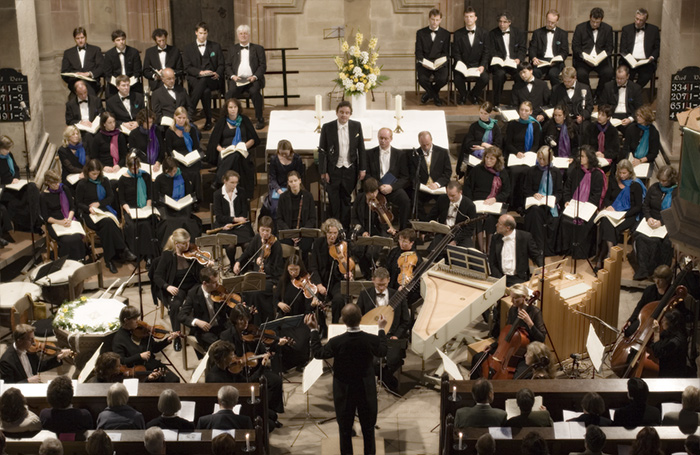
Performance & Opus This recording is part of a cycle of old testament oratorios by G. F. Handel and is one of the many concerts performed at Maulbronn monastery over the past years. The series combines authentically performed baroque oratorios with the optimal acoustics and atmosphere of this unique monastic church. This ideal location demands the transparency of playing and the interpretive unveiling of the rhetoric intimations of the composition, which is especially aided by the historically authentic performance. The music is exclusively performed on reconstructed historical instruments, which are tuned to the pitch customary in the composers lifetime (a = c. 415 Hz).
A vital aspect of Jürgen Budday's interpretation of George Frideric Handel's The Messiah, apart from matters of performance practice, is his focus on the work's dynamic conception. Dynamics are notated in the autograph manuscript, but Handel further annotated the Dublin score to mark the ripieno passages. By adding shifts in ensemble strength to the alternation of piano and forte, Handel evokes an ample measure of contrast and colour. Handel's dynamic indications in The Messiah go beyond the usual forte, piano and pianissimo to include mezzo piano and un poco piano, markings by which he intended an even finer differentiation. One would do well, when preparing a performance, to observe the ripieno indications in the Dublin score, as they are for the most part essential to Handel's dynamic conception. Examples in point include the arias Comfort ye (No. 2) and Ev'ry valley shall be exalted (No. 3); the choruses And the glory, the glory of the Lord (No. 4) and His yoke is easy, His burthen is light! (No. 18); as well as the beginning of the Hallelujah chorus (CD II, No. 16). The Maulbronn interpretation takes this dynamic conception seriously and clearly differentiates solo and ripieno sections in the numbers just mentioned. This inevitably gives rise to novel and more subtle auditory impressions, for which the beginning of the Hallelujah chorus provides a clear example. Elsewhere, Handel's senza ripieno indications appear to have been motivated more by consideration of the technical inadequacies of his ripienisti, and therefore were not observed in the Maulbronn performance. The libretto and the music, each in itself and together as a whole, form a providential unity. The libretto, ascribed to Charles Jennens, is no mere compilation of Bible quotations, and Jennens made various changes to the wording of the selected text passages. In the course of successive performances, Handel composed variants of some of the arias to fit the immediate occasion or circumstances. For the Maulbronn performance, those variants were chosen that Handel himself is said to have preferred. |
Copyright by K&K Verlagsanstalt. View more at: The K&K Movie Channel.
Copyright by K&K Verlagsanstalt. View more at: The K&K Movie Channel.
|
Artists
Miriam Allan, a graduate student of Emma Kirkby and Julianne Baird, was a prize winner at the 2003 London Handel Society's singing competition. Since completing her studies at the University of Newcastle (Australia), she has developed a lively concert career. She has performed the most important works of Bach, Handel and Purcell with such leading choirs and orchestras as the Australian Chamber Orchestra and the Sydney Philharmonia. Additionally – and this is quite unusual for such a young singer – she gives recitals. These are mostly devoted to the repertoire of the 17th and 18th centuries.
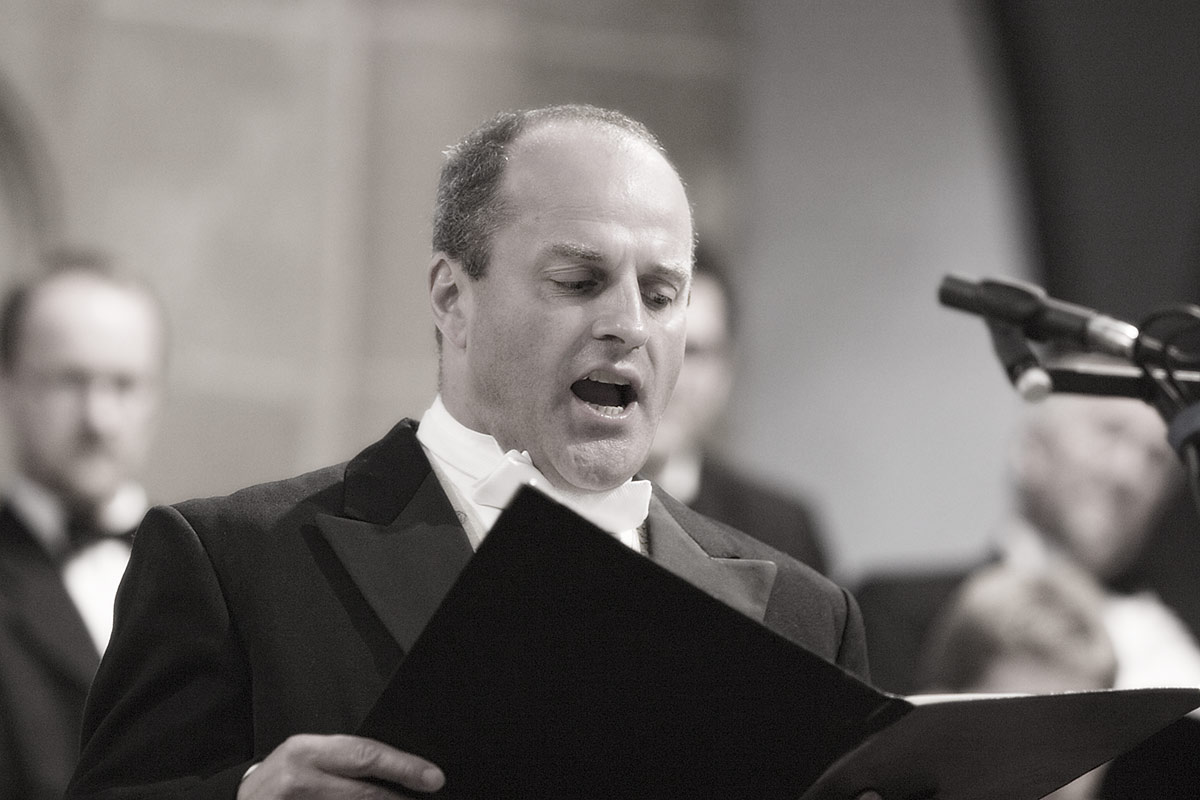
Mark Le Brocq held a choral scholarship at St Catherine's College, Cambridge where he read English. He won several prizes and awards at the Royal Academy of Music including the Blyth Buesset Opera Prize, the Royal Academy of Music Club Prize and the Worshipful Company of Musicians' Medal. He was formerly a company principal with the English National Opera. Over the years, the tenor has worked together with many important directors, including David Alden, David Poutney, Jonathan Miller, Niklaus Lehnhoff, Graham Vick and David Freeman. He performed regularly with the Gabrieli Consort under Paul McCreesh. He sang with Monserat Caballé and Dennis O' Neill in Verdi Opera Galas in Bath, the Mozart and the Verdi Requiems in the Barbican Centre, London and the Mozart Requiem with The English Concert under Trevor Pinnock in Salzburg.
Christopher Purves received vocal instruction from David Keren and Diane Forlano. He made his solo debut at the 1988 Aix-en-Provence Festival, appearing in a Mozart program with "The Sixteen" ensemble under the direction of Harry Christophers. He has appeared as soloist in numerous operas (including works by Mozart and Monteverdi) and major Handel oratorios. He has made an earlier appearance in Maulbronn in a production of Judas Maccabaeus. His concert engagements have taken him to major concert halls throughout the world in the company of such ensembles and conductors as The Sixteen, Philippe Herreweghe, Richard Hickox, the Gabrieli Consort Covent Garden, John Taverner and the Academy of Ancient Music.
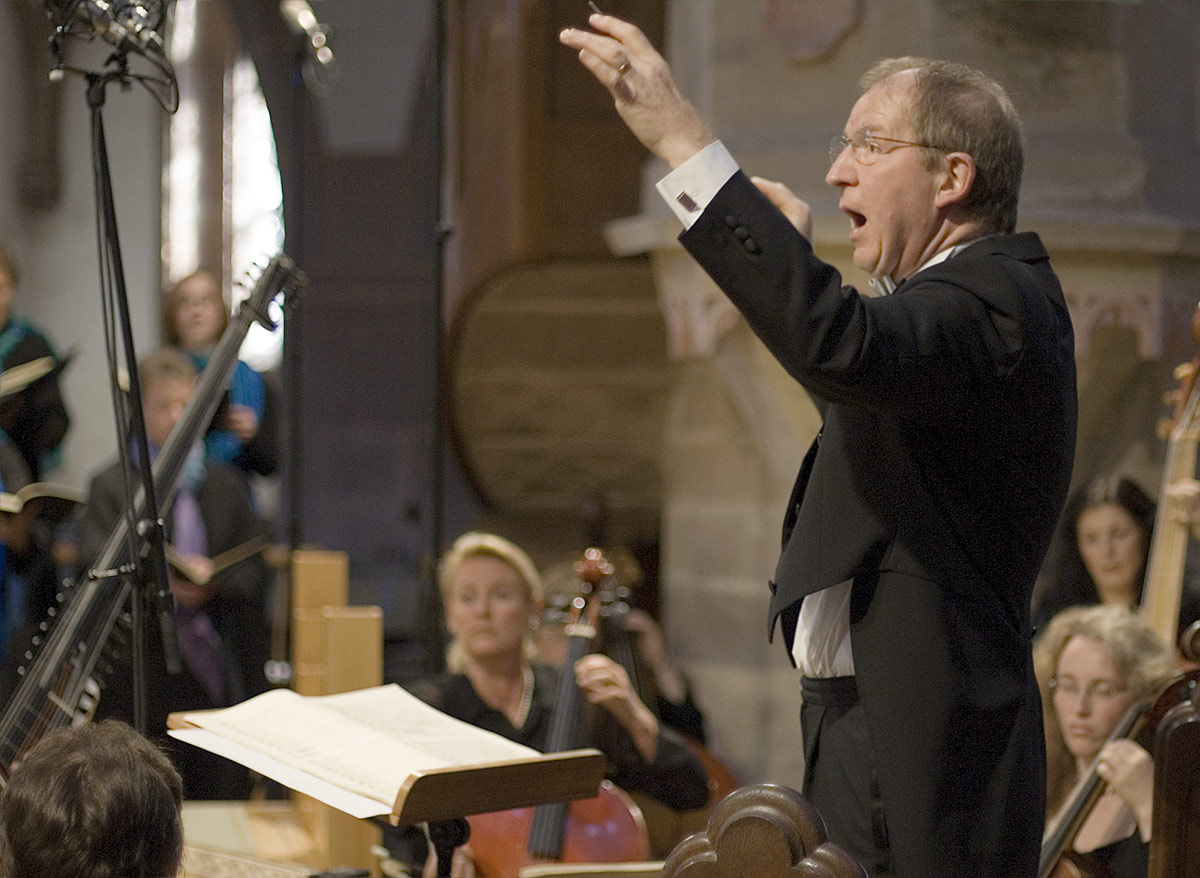
Jürgen Budday is director of church music and artistic director of the concert series at the monastery of Maulbronn, of the cantor choir and of the Maulbronn Chamber Choir. He studied music education, church music and musicology at the Academy of Music in Stuttgart and, since 1979, has taught at the Evangelic Theology Seminar in Maulbronn. For his teaching and artistic activity, he has received many awards, including the Bundesverdienstkreuz am Bande (German Cross of Merit) and the Bruno-Frey Prize from the State Academy, Ochsenhausen. Since 2002, Jürgen Budday has also held the chair of the choral committee of the German Music Council. Several concert recordings have been made under his artistic direction. They have often received international recognition and high praise from critics. These have included the Handel oratorios "Samson", "Judas Maccabaeus", "Saul", "Solomon" and "Belshazzar" with Emma Kirkby, Michael Chance, Nancy Argenta and Stephen Varcoe. |
|
George Frideric Handel (1685-1759) The libretto in English The Messiah was conceived and written as a unified whole, and as such it receives its due in this recording, which presents the work as it should be: uncut and in its entity. Numerous criteria support the concept of the work as a unified whole: the careful balance maintained between the 23 choruses and the solo numbers; the contrasts created by alternating secco recitative, accompagnato, arioso, and aria and by juxtaposing homophonic and polyphonic textures in the choruses; the unerring deftness with which primary and secondary climaxes are scaled; the use of a common affect to connect aria to chorus, as in But who may abide the day of His coming (No. 6) and And He shall purify (No. 7), or He shall feed His flock like a shepherd (No. 17) and His yoke is easy, His burthen is light (No. 18); the similarly unifying use of a common melodic motif, as in the duet O death, were is thy sting (CD II, No. 21) and the succeeding chorus But thanks be to God (CD II, No. 22); the holding in reserve of the da capo aria form for moments of particular emphasis; the overall key scheme; and the occasional turn to the dramatic, as evinced in the turba chorus He trusted in God (No. 25), or in Why do the nations so furiously rage together? (CD II, No. 13) and Let us break their bonds asunder (CD II, No. 14). The Messiah occupies a singular position in Handel's oeuvre. Among all of the works that make up Handel's monumental creative legacy, The Messiah may not represent the absolute pinnacle - some of the other oratories are strong contenders in this respect - but it does stand out as the most celebrated work, thanks to its strong universal appeal and a concrete message that is able to captivate listeners of the most diverse philosophical persuasions. Already versed in Catholic church music from his years in Italy, the young master encountered the tradition of the anthem in England, a form that had been regarded as the crowning glory of English ecclesiastical music, particularly since the time of Henry Purcell. All of the important musical genres of Handel's day - passions, cantatas, anthems, operas, instrumental music - together formed the basis for Handel's new art form, which underwent ever more vigorous development from the end of the 1730s on and assumed particularly protean form in The Messiah. This oratorio is undeniably a work with a unique character of its own, one shaped by subject matter that combines liturgical and popular elements; by a formal structure that integrates a vivid succession of elements borrowed from opera, the cantata, the concerto and the anthem; by a musical diction that unites the various styles while juxtaposing them to dramatic effect; and by a form of artistic expression of unequalled emotional force. The Messiah represents an extraordinarily fertile blending of concerted and operatic elements, of the utmost in compositional skill and maturity of technique with the most refined ideas. It has been speculated that Handel proposed the subject matter of The Messiah to Jennens and that its choice was motivated by Handel's affection for his deceased sister, for whom I know that my Redeemer liveth had been a favourite text. If the conjecture is not entirely without merit, it is not a very plausible one. Handel may have countered the archbishops by asserting that "I have read my Bible very well and will choose for myself," and he may have spurned Morell's verses, but his conduct towards Jennens was, on the evidence of their correspondence, that of an artist towards his patron. Nearly three years after composing The Messiah, Handel requested of Jennens, in a letter dated July 19, 1744, that the latter "be pleased to point out those passages in The Messiah which you think require altering." We owe The Messiah, it would seem, not to bitterness Handel may have harboured over the failure of his operatic ventures, not to a quest for spiritual solace, nor to affection for his deceased sister. That Jennens presented Handel with the libretto for The Messiah was itself sufficient stimulus for composition. The assumption that Handel composed The Messiah for his journey to Ireland, to which he had been invited by William Cavendish, Duke of Devonshire and Lord Lieutenant of Ireland, for the purpose of performing his works to benefit charitable institutions, is confirmed by an announcement in Faulkner's Dublin Journal ("...well-wishers to this Noble and Grand Charity for which this oratorio was composed..."). Although Handel travelled to Ireland in November 1741, a few weeks after completing The Messiah, he did not announce the work until April 1742. The first performance took place on the 13th of April in Neale's Music Hall on Fishamble Street, Dublin, although the work had already been heard in public rehearsal on the 9th of that month. |
|
Hanoverian Court Orchestra Marleen Goede-Uter - Concert Master
Soprano: Alto: Tenor: Bass: |
|
The Maulbronn Monastery CD Series Publishing culture in its authentic form entails for us capturing and recording for posterity outstanding performances and concerts. The performers, audience, opus and room enter into an intimate dialogue that in its form and expression, its atmosphere, is unique and unrepeatable. It is our aim, the philosophy of our house, to enable the listener to acutely experience every facet of this symbiosis, the intensity of the performance. The results are unparalleled interpretations of musical and literary works, simply - audiophile snapshots of permanent value. The concerts in Maulbronn monastery, which we document with this edition, supply, the ideal conditions for our aspirations. It is, above all, the atmosphere of the romantic, candle-lit arches, the magic of the monastery in its unadulterated sublime presence and tranquillity that impresses itself upon the performers and audience of these concerts. Renowned soloists and ensembles from the international arena repeatedly welcome the opportunity to appear here - enjoying the unparalleled acoustic and architectural beauty of this World Heritage Site (monastery church, cloister gardens, lay refectory, etc.), providing exquisite performances of secular and sacred music. Under the patronage of the Evangelical Seminar, the Maulbronn Monastery Cloister Concerts were instigated in 1968 with an abundance of musical enthusiasm and voluntary leadership. Within the hallowed walls of the classical grammar and boarding school, existent for more than 450 years, some of society's great thinkers, poets and humanists, such as Kepler, Hölderlin, Herwegh and Hesse received their first impressions. The youthful elan, the constructive participation of the pupils, continuing the tradition of their great predecessors, constructs an enlightened climate in which artistic ambitions can especially thrive. Twenty-five concerts take place between May and September. Their success can be largely attributed to the many voluntary helpers from near and far. There is a break for winter. Flourishing culture in a living monument, created for the delight of the live audience and, last but not least, you the listener, are the ideals we document with this series.
|


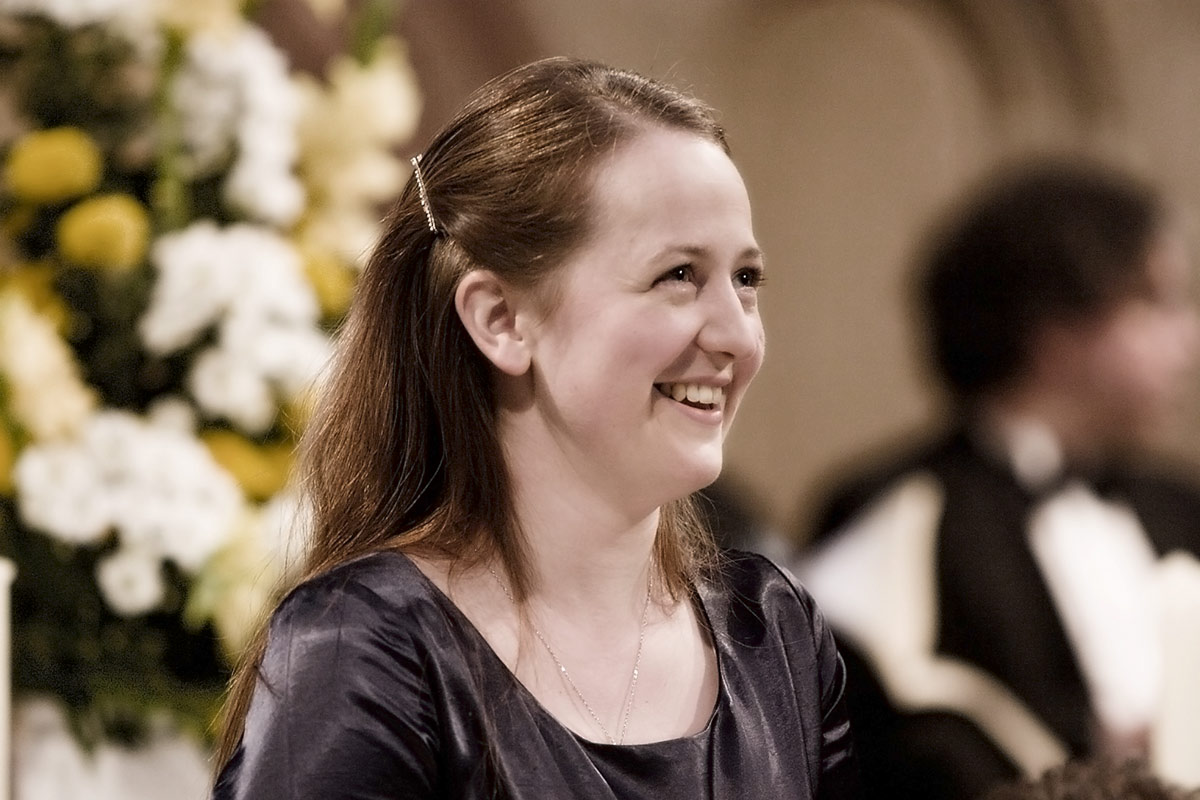 Miriam Allan - Soprano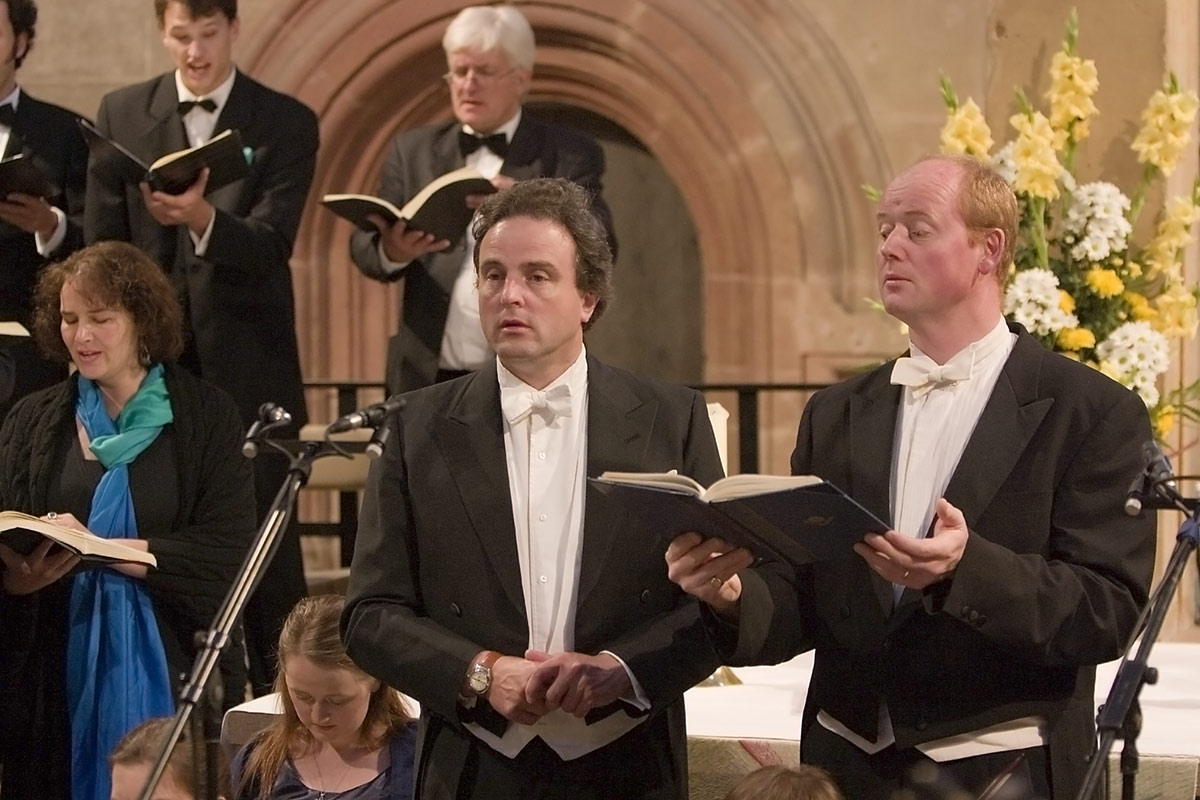
 Christopher Purves - Bass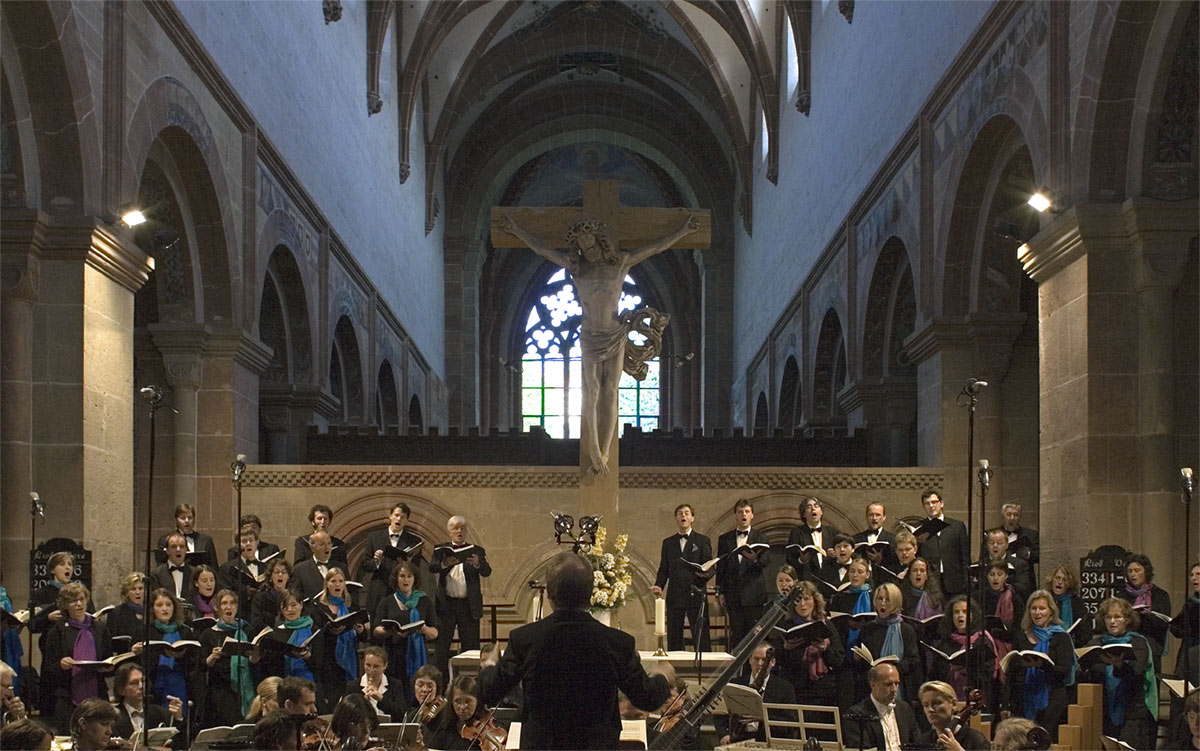
 Jürgen Budday (Conductor)