|
|
 |
|
|
|
|
|


|
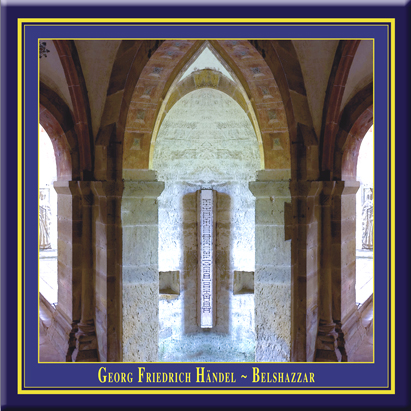
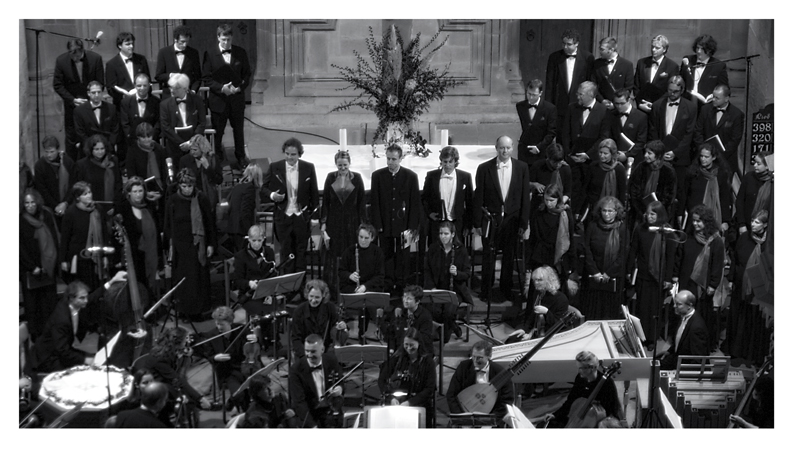
George Frideric Handel Oratorio in three acts Miriam Allan (Soprano) ~ Nitocris Hanoverian Court Orchestra (on period instruments) A concert at the minster of abbey Maulbronn 2-CD-Box, 147 minutes, DDD, |
|
Performance & Opus This recording is part of a cycle of old testament oratorios by G. F. Handel and is one of the many concerts performed at Maulbronn monastery over the past years. The series combines authentically performed baroque oratorios with the optimal acoustics and atmosphere of this unique monastic church. This ideal location demands the transparency of playing and the interpretive unveiling of the rhetoric intimations of the composition, which is especially aided by the historically authentic performance. The music is exclusively performed on reconstructed historical instruments, which are tuned to the pitch customary in the composers lifetime (a = c. 415 Hz).
|
|
Copyright by K&K Verlagsanstalt. View more at: The K&K Movie Channel. |
|
|
Artists
Michael Chance - Countertenor (Daniel)
|
|
George Frideric Handel (1685-1759) The libretto in English The oratorio, Belshazzar, devotes itself to the story of the Babylonian king, Belshazzar, as presented in the biblical story from the book of Daniel. Belshazzar commits sacrilege against the God of the Israelites, upon which a ghostly hand inscribes the mysterious text, the Menetekel, upon the wall of the court, predicting the downfall of the kingdom and the death of Belshazzar at the hands of the Persians. The prophecy is fulfilled that very same night. There are three versions of Belshazzar, dated 1745, 1751 and 1758. Handel composed the first between 23rd August and 23rd October, 1744. The exact dates are known from the correspondence Handel had with his librettist, Charles Jennens. Jennens had already penned the libretti to Saul and the Messiah. He was an enlightened theologian who didn't shy away from embellishing the biblical story to enhance the libretto's dramatic development. The debut performance took place on 27th March 1745 in the King's Theatre, Haymarket in London. But the work attracted few listeners, with even fewer being enthusiastic. A possible reason for this failure was the political message, from Handel unintended but nevertheless inferable, contained in the libretto. It could be seen as a manifesto against the ruling king of the time, George II, who, as a member of the House of Hanover, was not seen as the rightful monarch by many of the British. So it was that the conquering of the throne by Cyrus was seen as an allegory of a similar conquest in England by a member of the House of Stewart. Belshazzar was discontinued after only three performances and only years later, in 1751, after revisions from Handel, was it resumed. In addition to minor improvements, the changes included new arias, whereby others were cut and the role of Cyrus was song by a countertenor instead of a mezzo-soprano. It was far more successful than the original, and it is this second version (slightly shortened) that was used for this recording. It starts with the second scene of the première. Charles Jennens created an unbelievably dramatic libretto. He embroidered the biblical story of the Babylonian king, Balshazzar, with historical sources he found in Heredotus and Xenophon. In the oratorio, for example, the key figure of Nitocris is taken from Herodotus's histories apodexis. The oratorio has, even for Handel, extraordinary colour and vitality. The responsibility for the high drama of the piece rests mostly with the choir, which musically represents the three peoples. Babylon, the capital of Assyria, in the year 538 BC, is the scene of the action. The Euphrates flows through the city. It was diverted during the building of the city walls and a lake on the west side of the city was formed. The armies of Media and Persia, under the leadership of King Cyrus, are encamped before the walls. The first act starts before the gates of Babylon. From the walls, the Babylonians mock Cyrus and his fatuous plans to take the city. Gobrias, a Babylonian who has defected to Cyrus after his son was murdered by Balshazzar, confirms the sturdiness of the city's fortifications. Cyrus consoles him and relates his dream where he has seen the Euphrates dried up. He then devises a plan whereby the river would be diverted to the lake outside the walls, allowing them to penetrate the city using the waterless riverbed. Gobrias supports the idea to venture the plan on the day of the feast to Sesach, when the Babylonians pay homage to their god of wine, Sesach, and it is their religious duty to become intoxicated. Cyrus rouses his army and prays to God for support. The ensuing chorale takes up this plea to God from the Persians. In Babylon, the prophet Daniel predicts, for the imprisoned people of the Jews, the impending downfall of the city and proclaims Cyrus their God-sent liberator. The Jewish people sing a joyful chorale about their imminent deliverance. The chorale's first solemn, homophonic section expresses their hope of rescue. In the fourth scene, Belshazzar opens the festival in honour of Sesach. The people revel and imbibe excessively. Nitocris pleads with her son to put a stop to the celebrations, but he orders the sacred chalice of the Jews to be brought from the temple to be used as a wine goblet. Nitocris and the Jews warn him of the consequences of this sacrilege. The Jewish people react with the announcement that Belshazzar will shortly feel the wrath of God for his actions. In this three-sectioned chorale, the emotions develop by slow degrees: at first, sadness and hurt, then, in the second and third sections respectively, the suppressed and finally the released anger can be perceived. Especially moving is the demand for remorse that the Jewish people express. It goes singly through all the voices, builds up and finally flows into a homophonic sounding realisation that the waiting apparently will be in vain. The chromatically descending line "and every step he takes on his devoted head precipitates the thunder down" symbolises this hope gradually being transformed into anger. The second act starts with the Persians excitedly observing the diversion of the waters. "See from his post Euphrates flies…" with the soprano theme (coloratura) reflecting the flowing of the waters and the joyful excitement radiating out amongst the Persians as they watch the spectacle. This further prompts them to partake in a bizarre role-play, in which they contrive a dialogue between the incensed Babylonians (female choir) and the emboldened Persians (male choir). Then Cyrus gives the order to cross the riverbed and capture the city. The Persians intone a belligerent chorale. The feasting of the Babylonians is at its highpoint. Belshazzar is arrogantly blaspheming Jehova and, just as he is about to take the chalice to his mouth, there occurs what the Jews had warned him would happen. A ghostly hand inscribes on the wall the incomprehensible words "mene, mene, tekel, upharsin". Here, Handel realizes a musical treatment that is possibly is not close to any other operatic convention. The violins ascend unaccompanied in a chromatic line adagio e staccato, ma piano. Belshazzar is struck dumb with horror, solely able to utter an appalled sigh. The people of Babylon cry for help while Belshazzar still points fearfully at the mysterious script. Nobody can decipher the writings, and, at the suggestion of Nitocris, the prophet Daniel is summoned. He translates, from Handel composed as a suspenseful recitative accompagnato, the following: mene, it is the will of the God you dishonoured that the days of your reign be numbered; tekel, you have been weighed in the balances and found wanting; upharsin, your kingdom will be divided and be given to the Medes and Persians. Nitocris beseeches Belshazzar to plead with Jehova for forgiveness, but he does not allow himself to be swayed, even now. Cyrus and Gobrias infiltrate the city and lay the foundation for the dethroning of Belshazzar. The third act opens with Nitocris in her chambers receiving news of the conquest of the city. The Jews are joyfully celebrating and thank Jehova for his mercy. Convinced of his strength, the brazen Belshazzar confronts the invaders. He falls in battle, the orchestra executing a military march. Nitocris submits to the new ruler, Cyrus, who promises the Babylonians freedom also. He grants this to Nitocris as well, and even entreats her to accept him as son in Balshazzars stead. Daniel predicts for Cyrus that he will become the deliverer of the people of Israel and will rebuild the city and temple of Jerusalem. This, Cyrus commends to do. |
|
Hanoverian Court Orchestra Marleen Goede-Uter - Concert Master
Soprano: Alto: Tenor: Bass: |
|
About the edition Concerts from Maulbronn Monastery, a UNESCO's World Heritage Site: The Edition Josef-Stefan Kindler |
|
George Frideric Handel (1685-1759) ~ |
|
|
CD I 1. Overture The First Scene is missing in the version
2. Chorus of Babylonians 3. Gobrias Cyrus Gobrias 4. Gobrias 5. Cyrus 6. Cyrus 7. Cyrus 8. Cyrus Gobrias Cyrus Gobrias Cyrus Gobrias Cyrus Gobrias 9. Gobrias 10. Cyrus 11.. Cyrus 12. Chorus of Persians
13. Daniel 14. Daniel after Jeremiah 29, 13-14
after Isaiah 45, 1-6; 44, 28
16. Belshazzar 17. Belshazzar Nitocris Belshazzar Nitocris 18. Chorus of Jews 19. Nitocris Belshazzar Duet 20. Nitocris Belshazzar Nitocris Belshazzar Nitocris Exeunt severally. 21. Chorus of Jews |
CD I 1. Ouvertüre Die erste Szene fehlt
2. Chor der Babylonier 3. Gobrias Cyrus Gobrias 4. Gobrias 5. Cyrus 6. Cyrus 7. Cyrus 8. Cyrus Gobrias Cyrus Gobrias Cyrus Gobrias Cyrus Gobrias 9. Gobrias 10. Cyrus 11. Cyrus 12. Chor der Perser
13. Daniel 14. Daniel nach Jeremiah 29, 13-14
nach Jesaja 45, 1-6 und 44,28
16. Belsazar 17. Belsazar Nitocris Belsazar Nitocris 18. Chor der Juden 19. Nitocris Belsazar Duett 20. Nitocris Belsazar Nitocris Belsazar Nitocris Sie gehen getrennt ab. 21. Chor der Juden |
|
George Frideric Handel (1685-1759) ~ |
|
|
Scene1 22. Chorus of Persians Semi-Chorus Semi-Chorus Full Chorus 23. Cyrus 24. Chorus of Persians
CD II
Scene 2 1. Chorus of Babylonians 2. Belshazzar 3. Belshazzar As he is going to drink, a hand appears writing Ah! - 4. Chorus of Babylonians Belshazzar Chorus 5. Belshazzar A Sinfony (Allegro Postillons) Enter Wise Men of Babylon. 6. Belshazzar Wise Men 7. Chorus of Babylonians Enter Nitocris. 8. Nitocris Enter Daniel. Belshazzar 9. Daniel 10. Daniel MENE, MENE, TEKEL, UPHARSIN: - MENE: the God, whom thou hast dishonour'd, TEKEL: thou in the balances art weigh'd, PERES: thy kingdom is divided, 11. Nitocris Exit.
13. Cyrus 14. Cyrus 15. Chorus |
Erste Szene 22. Chor der Perser Erster Halbchor Zweiter Halbchor Chor 23. Cyrus 24. Chor der Perser
CD II
Zweite Szene 1. Chor der Babylonier 2. Belsazar 3. Belsazar Als er im Begriff ist zu trinken, erscheint eine Hand, Ha! - Chor der Babylonier Belsazar Chor 5. Belsazar Sinfonia (Allegro Postillons) Die babylonischen Magier treten ein.. 6. Belsazar Magier 7. Chor der Babylonier Nitocris kommt. 8. Nitocris Daniel kommt. Belsazar 9. Daniel 10. Daniel MENE, MENE, TEKEL, UPHARSIN: - MENE: - Der Gott, den du so frech gelästert, TEKEL: - Du wurdest gewogen auf der Waage PERES: - Es wird dein Reich geteilet, 11. Nitocris Ab.
13. Cyrus 14. Cyrus 15. Chor |
|
George Frideric Handel (1685-1759) ~ |
|
|
Scene 1 16. Nitocris 17. Nitocris Arioch Enter a Messenger. Messenger Nitocris Messenger 18. Chorus of Jews
19. Belshazzar 20. A MARTIAL SYMPHONY
21. Gobrias 22. Cyrus Exit Gobrias. 23. Cyrus Re-enter Gobrias, 24. Duet Nitocris Cyrus 25. Cyrus (to Daniel) Daniel 26. Soli and Chorus 27. Cyrus 28. Soli and Chorus Daniel Daniel, Nitocris Chorus |
Erste Szene 16. Nitocris 17. Nitocris Arioch Ein Bote kommt. Bote Nitocris Bote 18. Chor der Juden
19. Belsazar 20. KRIEGERISCHE MUSIK
21. Gobrias 22. Cyrus Gobrias ab. 23. Cyrus Gobrias kommt zurück 24. Duett Nitocris Cyrus 25. Cyrus (zu Daniel) Daniel 26. Solisten und Chor 27. Cyrus 28. Solisten und Chor Daniel Daniel, Nitocris Chor |


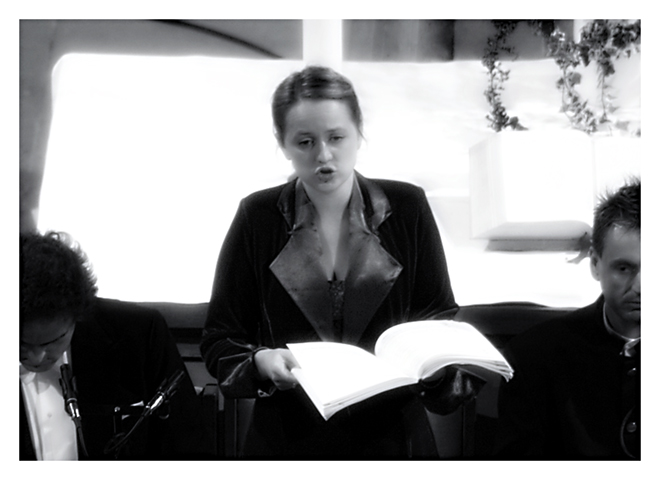 Miriam Allan, a graduate student of Emma Kirkby and Julianne Baird, was a prize winner at the 2003 London Handel Society's singing competition. Since completing her studies at the University of Newcastle (Australia), she has developed a lively concert career. She has performed the most important works of Bach, Handel and Purcell with such leading choirs and orchestras as the Australian Chamber Orchestra and the Sydney Philharmonia. Additionally - and this is quite unusual for such a young singer - she gives recitals. These are mostly devoted to the repertoire of the 17th and 18th centuries.
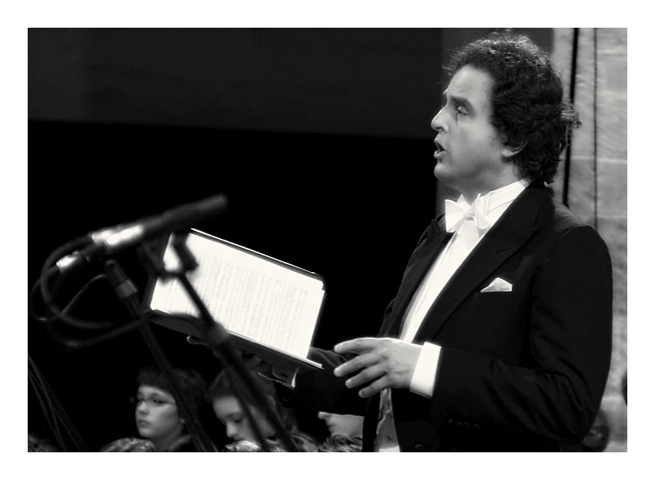 Michael Chance's carrier began, as did so many of his colleagues, in King's College, Cambridge, as countertenor in England's conceivably most famous choir. Today he is one of the worlds most sought after countertenors, not only for opera - he sang, for example, the military governor in the world première of Judith Weir's "A Night at the Chinese Opera" - but also for oratorios and songs. He is a visiting professor at the Royal College of Music, London. He performs often in Paris, Amsterdam, Stuttgart and Berlin and has also been in America, Japan and Australia many times. Frieder Bernius, Frans Brüggen, John Eliot Gardiner and Trevor Pinnock are just some of the conductors that he works with regularly. A specialty of Michael Chance's is the song evenings he gives with the Gamben-Consort Fretwork, Nigel North and, more recently, Roger Vignoles, in which he sings pieces for voice and lute from the English Renaissance and also, frequently, works from contemporary, mostly English composers.
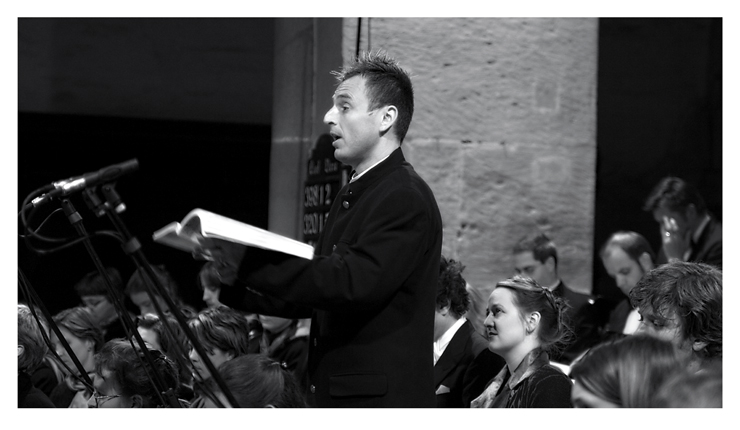 The Belgian countertenor, Patrick van Goethem, was a student of Marie-Thérèse Maesen and Zeger Vandersteene. After being tutored in Baroque music by Paul Esswood, Julia Hamari and Andrea Scholl, Van Goethem is today a sought after concert singer and works as soloist with many renowned conductors. Van Geothem was a guest on the stages of all the important European festivals and concert halls, such as the Gewandhaus Leipzig, Festival Van Vlaandern, Oude Muziekfestival Utrecht, Festival di Cremona, Bachfest Leipzig, London Bach Festival and Festival de Vézelay.
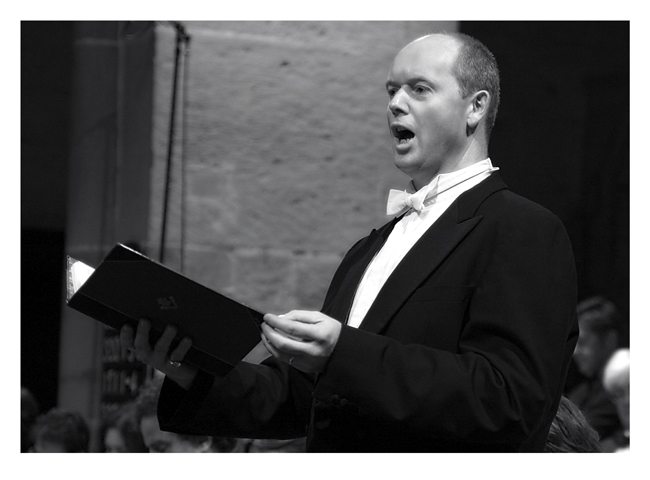 Mark Le Brocq held a choral scholarship at St Catherine‘s College, Cambridge where he read English. He won several prizes and awards at the Royal Academy of Music including the Blyth Buesset Opera Prize, the Royal Academy of Music Club Prize and the Worshipful Company of Musicians' Medal. He was formerly a company principal with the English National Opera. Over the years, the tenor has worked together with many important directors, including David Alden, David Poutney, Jonathan Miller, Niklaus Lehnhoff, Graham Vick and David Freeman. He performed regularly with the Gabrieli Consort under Paul McCreesh. He sang with Monserat Caballé and Dennis O‘Neill in Verdi Opera Galas in Bath, the Mozart and the Verdi Requiems in the Barbican Centre, London and the Mozart Requiem with The English Concert under Trevor Pinnock in Salzburg.
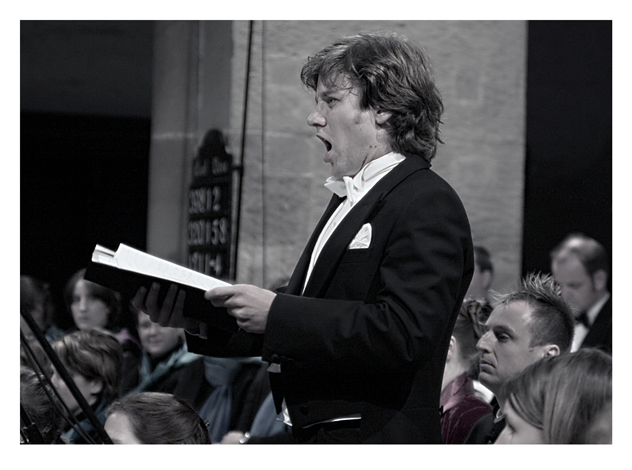 Born in 1975, André Morsch began his studies in Austria, at the Conservatory in Feldkirch, with Ralf Ernst. He continued his studies with Margreet Honig at the Conservatorium of Amsterdam, graduating with distinction in 2003. His engagements include the role of Achillas (Giulio Cesare) with the State Opera, Stuttgart, Simanov in Jan van de Putte's "Wet Snow" with the National Reis Opera and Mendelssohn's Elias with the Israel Chamber Orchestra in Jerusalem and Tel Aviv. In September 2002 he won the Prix Bernac of the Ravel Academy in Saint Jean de Luz.
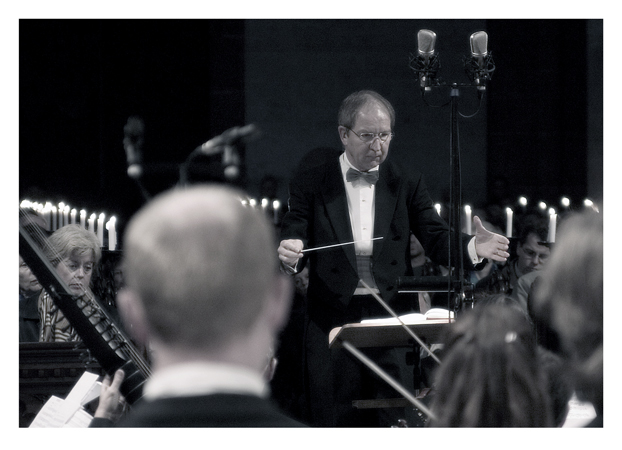 Jürgen Budday is director of church music and artistic director of the concert series at the monastery of Maulbronn, of the cantor choir and of the Maulbronn Chamber Choir. He studied music education, church music and musicology at the Academy of Music in Stuttgart and, since 1979, has taught at the Evangelic Theology Seminar in Maulbronn. For his teaching and artistic activity, he has received many awards, including the Bundesverdienstkreuz am Bande (German Cross of Merit) and the Bruno-Frey Prize from the State Academy, Ochsenhausen. Since 2002, Jürgen Budday has also held the chair of the choral committee of the German Music Council. Several concert recordings have been made under his artistic direction. They have often received international recognition and high praise from critics. These have included the Handel oratorios Jephtha, Samson, Judas Maccabaeus and Saul with Emma Kirkby, Michael Chance, Nancy Argenta and Stephen Varcoe.