|
|
 |
|
|
|
|
|


|
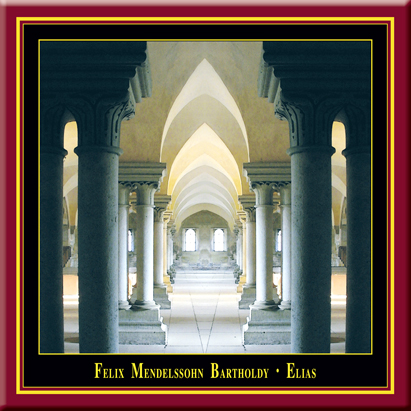
Felix Mendelssohn-Bartholdy Peter Lika - bass (Elijah) Additional soloists: A concert-recording from the minster Cover art: Josef-Stefan Kindler, 2003 |
|
Mendelssohn's Elijah, one of the most important oratorios of the nineteenth century, premiered in Birmingham in 1846 and was emphatically celebrated both by the public and the press. According to a contemporary review, Mendelssohn turned music "into a grand sacred service". Elijah is a biblical figure, and consequently the libretto is composed entirely from biblical texts. The oratorio lacks a continuous plot. Rather, important excerpts from the life of the prophet are strung together like snapshots, some of which are highly dramatic. The libretto of Mendelssohn´s oratorio Elijah: |
|
Copyright by K&K Verlagsanstalt. View more at: The K&K Movie Channel. |
> Video II |
|
Performers
Heidi Elisabeth Meier (Widow, Angel) Jolanta Michalska-Taliaferro (Queen, Angel) Hans Peter Blochwitz (Obadjah, Ahab) Kantorei Maulbronn (Maulbronn Cantor Choir)
|
|
When the directors of the Birmingham Festival commissioned Felix Mendelssohn to compose and conduct a new oratorio in 1846, the thirty-eight year old composer had long been the most celebrated musician in Europe. Mendelssohn had been a child prodigy, a virtuoso performer on both piano and organ as well as a composer. By the age of seventeen he had already written such outstanding works as the Octet for Strings and the Overture to A Midsummer Night's Dream. His compositions were extraordinarily popular; his violin concerto was performed so often that a little ditty was sung to the opening bars, "Schon wieder, schon wieder, das Mendelssohn Konzert," ("And yet again, that Mendelssohn Concerto!") He was no less eminent as a conductor and had fashioned the Leipzig Gewandhaus Orchestra into one of the premiere ensembles of Europe. Early Career As with Mozart, Mendelssohn's talent blossomed early. He made his debut as a soloist at age nine, the same year he had the first public performance of one of his compositions. Unlike Mozart, however, there was never any question of exploiting his talent. His father was a successful and wealthy banker, and young Felix had the opportunity to master his craft without public scrutiny. His memory was phenomenal. He could play all of Beethoven's symphonies by heart while still a boy and it was said that he remembered every piece of music he ever heard. He could instantly play anything after hearing it once. His compositional skills were equally remarkable and he came into his mature style far earlier than Mozart. The Octet for Strings was written when he was only sixteen. With its expansive lyricism, it is not only one of the most beautiful pieces of music ever written but it also comes close to compositional perfection in its balance, form and structure. The next year, 1826, saw another landmark work, the Overture to A Midsummer Night's Dream. With the unprecedented gossamer-like texture in the opening strings, it broke new ground in musical tone painting and was followed with equally evocative works such as The Hebrides Overture and the Symphony No. 3 (Scottish), both from 1830. Mendelssohn made another outstanding contribution to music of different sort when the twenty-year-old composer mounted a revival of Bach's St. Matthew Passion in Berlin in 1829. Bach's music had not been forgotten by any means, but he was known mainly by his keyboard music. Bach's sacred music, composed largely as part of his duties as cantor of the Thomaskirche in Leipzig, was considered merely service music. Mendelssohn's performance of the St. Matthew Passion reawakened an interest in Bach's choral music that has lasted to this day. Mendelssohn as Conductor That performance also helped Mendelssohn embark on yet another (simultaneous) career as a conductor. Although composers and soloists traditionally led orchestral performances, much of the interpretation as well as keeping time and cueing entrances was left to leaders within the ensemble. The concept of conductor as music director, who shaped the performance according to his interpretation, was a novel one at that time. Mendelssohn was one of the first conductors to use a baton and to take charge of conducting an entire performance. This caused quite a bit of controversy with the musicians when he was invited to take over the Leipzig Gewandhaus concerts in 1833, and Robert Schumann finally intervened to smooth matters out. An eyewitness related Mendelssohn's conducting style. "Mendelssohn's fiery glance surveyed and dominated the entire orchestra. Reciprocally, all eyes were on the tip of his conductor's baton. Thus he was able, with sovereign freedom, to lead the masses at all times according to his will." He was not, however, the prototype of the autocratic conductor. He realized that musicians required financial security in order to excel at their craft and he engaged in long and ultimately successful negotiations with municipal officials in Leipzig to obtain a guaranteed salary and pension benefits for the Gewandhaus Orchestra, laying the foundations of the modern professional orchestra. He also was the driving force for the founding of the Leipzig Conservatory, the first such institution in Germany dedicated to training musicians. The scope of Mendelssohn's genius and his accomplishments astound us even today. It is puzzling why his reputation languishes. It is certainly not that his music is not played, for his symphonies, overtures, concerti and chamber music have long been in the standard repertoire. Some of his music has even made it into the public domain: his Spring Song and the Bridal March from A Midsummer Night's Dream have taken on lives of their own apart from their origins. In some ways Mendelssohn has become a victim of his own talent. Like Mozart, he had such facility at composition and worked out musical problems so smoothly that his music almost sounds obvious or predictable in unskilled hands. We want to see in composition the titanic struggle of creation à la Beethoven, with music paper covered in blots and worn through with scratching out and rewriting notes. We respect music that bears the mark of the forge, the occasional rough spot or seam. We can perhaps forgive Mozart his ease of composition because of the circumstances of his life, but it is difficult to forgive Mendelssohn for having had every advantage in life and incredible talent as well! The Genesis of Elijah Mendelssohn had long contemplated the idea of an oratorio dealing with Elijah. He had already composed the first successful oratorio since the days of Handel and Haydn, St. Paul, and had even tried to interest a librettist for a time. The commission from the Birmingham Festival afforded him the opportunity to take the project up again. He returned to the Rev. Julius Schubring, who had also supplied the libretto for St. Paul. Schubring had a rather didactic view of the project and wanted to include explicit Christian theology. Mendelssohn had another view altogether and wrote, "I would fain see the dramatic element more prominent as well as more exuberant and defined....(T)he dramatic element should predominate." Mendelssohn repeatedly asked for specific scenes and texts to be set and ultimately the libretto was constructed. Although Mendelssohn spoke English fluently, he engaged his English friend William Bartholomew to prepare the English translation which would be set. The score was finally completed in mid-August of 1846, just in time for Mendelssohn to conduct the premiere at the Birmingham Festival on August 26, 1846. The oratorio was an instant success. There was thunderous applause and repeated encores (this was quite unusual in Britain at that time, where oratorio performances were seen as quasi-religious events and generally not applauded) and Elijah quickly took its place alongside Messiah and The Creation in the pantheon of oratorios. Historical Background to the Story The libretto of Elijah does not provide a continuous story line so a brief recounting of Elijah's story may be in order. Ahab is king in Israel and has married Jezebel, the daughter of the king of the Phoenician city Sidon. Jezebel has introduced the worship of the false god Baal, and Ahab has begun persecuting those who remained faithful to the Lord. Obadiah, Ahab's vizier, has remained faithful to the Lord and is providing a place of refuge to as many prophets and holy men as he can. Elijah suddenly appears and prophesies a drought. Elijah goes into the desert while Ahab searches in vain for him. After a while, Elijah goes to Zarephath, where he asks a widow to give him lodging and food. The widow has just enough for a single meal, but Elijah convinces her to trust in the Lord and He will provide for her. She agrees and during the time that Elijah stays with her, her food is miraculously replenished. Her son, however, sickens and dies, but Elijah prays to the Lord and the son's life is restored. At the end of three years, Elijah returns to Israel to face Ahab. He challenges Ahab to have a sacrifice prepared but no fire lit under it. The priests of Baal will invoke their god while Elijah will invoke the Lord to ignite the fire. The priests of Baal summon him in vain while Elijah mocks them. His own prayer to the Lord is answered by fire, and the people, seeing this, repent. Elijah has the priests of Baal taken and executed. He then prays for an end to the drought and the Lord sends rain again upon the land. Elijah's triumph is short lived, for Jezebel stirs up the people against him. He is forced to flee into the desert, where he despairs over his failure to bring the people back to the Lord. Angels come to comfort him and he is directed to Mount Horeb, where the Lord will come to him. As he waits on the mount there is first a violent wind, then an earthquake and finally a raging fire, but the Lord is in none of them. He comes as a small, still voice, telling Elijah to return to Israel. Elijah passes from history for a time, but returns for one more confrontation with Ahab, who eventually repents of his ways, and a confrontation with Ahab's son and successor Ahaziah. Meanwhile, Elijah has been training his own successor Elisha. The Lord sends a fiery chariot with fiery horses to Elijah and the prophet is taken up into heaven in a whirlwind, much to the astonishment of Elisha.
Part I Elijah opens in dramatic fashion, not with the customary overture but with Elijah proclaiming the curse, much as the prophet himself abruptly appeared to Ahab. Mendelssohn in fact planned to omit the overture altogether since it interfered with the developing story line, but was later persuaded by Bartholomew to add one, placing it, however, after Elijah's introduction. This performance returns to Mendelssohn's original concept and the overture has been discarded. The people plead for rain ("Help, Lord" and "Lord, bow Thine ear") while Obadiah urges them to repent. An angel sends Elijah to the widow of Zarephath ("Elijah, get thee hence.") Elijah's duet with the widow ("What have I to do with thee") provides the first great dramatic moment, when Elijah prays to the Lord three times that her son might be restored to life. The magnificent chorus "Blessed are the men who fear Him" is one of Schubring's interpolations into the story, but provides Mendelssohn with an opportunity for some wonderfully evocative writing, such as the ascending triads to the text "through darkness riseth light." Elijah returns to face Ahab ("As God the Lord of Sabaoth") and places his challenge to the priests of Baal. The priests invoke Baal ("Baal, we cry to thee") while Elijah mocks them ("Call him louder"). This is the dramatic high point of the oratorio, with Elijah's calm contrasting with the increasingly frenetic music of the chorus. Their invocation ends with a fortissimo "Hear and answer!" which is followed by dead silence, surely one of the most dramatic and effective moments in oratorio. By contrast, Elijah then invokes the Lord with music of great nobility and simplicity ("Draw near, all ye people.") There is a brief interpolation by a quartet ("Cast thy burden upon the Lord") before the fire comes down from heaven ("O Thou, who makest thine angels spirits.") Obadiah pleads with Elijah to send rain ("O man of God, help thy people.") Three times Elijah prays to the Lord for rain ("Thou hast overthrown thine enemies") and sends a young boy to the top of a hill to look out over the sea for rain. At the third time the rain comes, and the people join in an exuberant hymn of praise ("Thanks be to God.") Part II Part II of Elijah begins with hymns of reassurance ("Hear ye, Israel!" and "Be not afraid"), but Elijah is soon embroiled in controversy again. He confronts Ahab, taking him to task for his idolatry ("The Lord hath exalted thee") while Jezebel stirs up the people against Elijah ("Woe to him.") Obadiah advises him to flee ("Man of God") and Elijah, alone in the desert, is in despair ("It is enough.") Angels come and comfort him ("Lift thine eyes" and "He watching over Israel") and Elijah makes his way to Mount Horeb to await the Lord. Here Mendelssohn again uses some vividly descriptive music depicting the fury of the wind, the earthquake and the fire, contrasting that with the simplicity to which he sets the text "and in that still voice, onward came the Lord." There follows another hymn of praise ("Holy is God the Lord") and a choral recitative ("Go, return upon thy way") as Elijah is sent back to Israel refreshed in spirit ("For the mountains shall depart.") Elijah is taken up to heaven in a whirlwind ("Then did Elijah") followed by Schubring's final interpolation, an invitation to come to the Lord ("O come, everyone that thirsteth") and the final choral hymn of praise ("And then shall your light break forth"), ending the oratorio with a majestic fugue. Those familiar with Elijah may have detected another omission, the solo aria "O rest in the Lord." While it has become one of the most popular pieces in Elijah, Mendelssohn was originally inclined to cut it from the score. The melody bore a resemblance to a popular ballad and Mendelssohn did not really like it. It "is a song to which I have always had an objection," he wrote. "I shall leave it out altogether (I think) ... (I) believe it an improvement if it is left out." As it happened, Mendelssohn was persuaded by Bartholomew to leave it in, but in this performance the composer's original intention is being respected. Program notes copyright © 1997 Mendelssohn Club of Philadelphia. All rights reserved. |
|
Felix Mendelssohn Bartholdy Erster Teil ~ CD I
Elias 2. Ouvertüre |
Felix Mendelssohn Bartholdy Part I ~ Disc 1
Elijah 2. Overture |
|
Klage, Gebet und Verheissung |
Moan, prayer and promise |
|
3. No. 1 ~ Chor Chor (Das Volk) Chor-Rezitativ 4. No. 2 ~ Duett mit Chor Chor (Das Volk) Zwei Frauen (Sopran I und II) 5. No. 3 ~ Rezitativ Obadiah
Obadjah
Chor (Das Volk) |
3. No. 1 ~ Chorus: Help, Lord! The People
4. No. 2 ~ Duet with Chorus: Lord, Bow thine ear The People Two Women 5. No. 3 ~ Recitative: Ye people, rend your hearts Obadiah 6. No. 4 ~ Aria: If with all your hearts Obadiah 7. No. 5 ~ Chorus: Yet doth the Lord The People |
|
Wunder der Erweckung |
Miracle of the revival |
|
8. No. 6 ~ Rezitativ (Ein Engel) Ein Engel 9. No. 7 ~ Doppel-Quartett (Die Engel) & Rezitative Die Engel Ein Engel 10. No. 8 ~ Rezitativ, Arie und Duett Die Witwe Elias Die Witwe Elias Die Witwe Elias Die Witwe Elias Die Witwe Elias Beide (Duett) 11. No. 9 ~ Chor Chor |
8. No. 6 ~ Recitative: Elijah, get thee hence An Angel 9. No. 7 ~ Double Quartet & Recitative Angels An Angel
The Widow
The Widow Elijah The Widow Elijah The Widow Elijah The Widow Elijah Both 11. No. 9 ~ Chorus: Blessed are the men People |
|
Wunder des Feuers |
Miracle of fire |
|
12. No. 10 ~ Rezitativ (Elias) & Chor Elias Ahab Chor Elias Chor (Das Volk) Elias Chor (Das Volk) Elias 13. No. 11 ~ Chor Chor (Die Propheten Baals) 14. No. 12 ~ Rezitativ (Elias) & Chor Elias Chor (Die Proheten Baals) 15. No. 13 ~ Rezitativ (Elias) & Chor Elias Chor (Die Propheten Baals) Elias 16. No. 14 ~ Arie (Elias) Elias 17. No. 15 ~ Solo-Quartett Die Engel 18. No. 16 ~ Rezitativ (Elias) Elias Chor (Das Volk) Elias Chor (Das Volk) 19. No. 17 ~ Arie (Elias) Elias 20. No. 18 ~ Arioso (Alt Solo) Alt |
12. No. 10 ~ Recitative & Chorus: As God the Lord Elijah Ahab The People Elijah The People Elijah The People Elijah 13. No. 11 ~ Chorus: Baal, we cry to thee Prophets of Baal 14. No. 12 ~ Recitative & Chorus: Call him louder Elijah Prophets of Baal 15. No. 13 ~ Recitative & Chorus: Call him louder Elijah Prophets of Baal Elijah 16. No. 14 ~ Aria: Draw near, all ye people Elijah 17. No. 15 ~ Solo-Quartet: Cast thy Burden Angels 18. No. 16 ~ Recitative & Chorus Elijah The People Elijah The People 19. No. 17 ~ Aria: Is not His word like a fire! Elijah 20. No. 18 ~ Arioso (Alto Solo) Alto |
|
Wunder des Regens |
Miracle of the rain |
|
21. No. 19 ~ Rezitativ (Obadjah & Elias) Obadjah Elias Chor (Das Volk) Elias Der Knabe
Elias Der Knabe Elias Der Knabe Elias Der Knabe Chor (Das Volk) Elias 22. No. 20 ~ Chor Chor (Das Volk) |
21. No. 19 ~ Recitative (Obadiah & Elijah) & Chorus Obadiah Elijah The People Elijah The Child Elijah The People Elijah The Child Elijah The Child Elijah
The People Elijah 22. No. 20 ~ Chorus: Thanks be to God! The People |
|
Felix Mendelssohn Bartholdy Teil II ~ Disc 2 |
Felix Mendelssohn Bartholdy Part II ~ Disc 2 |
|
Mahnung und Zuspruch |
Exhortation and encouragement |
|
1. No. 21 ~ Arie (Sopran Solo) Sopran Rezitativ Arie 2. No. 22 ~ Chor Chor |
1. No. 21 ~ Aria: Hear ye, Israel Soprano Recitative Aria 2. No. 22 ~ Chorus: Be Not Afaid Chorus |
|
Bedrohung und Rückzug des Elias |
Retirement and withdrawal of Elijah |
|
3. No. 23 ~ Rezitativ und Chor Elias Die Königin Chor (Das Volk) Die Königin Chor (Das Volk) Die Königin
Die Königin Chor (Das Volk) Die Königin Chor (Das Volk) Die Königin Chor (Das Volk) Die Königin Chor (Das Volk) Die Königin 4. No. 24 ~ Chor Chor (Das Volk) 5. No. 25 ~ Rezitativ (Obadjah) Obadjah Elias 6. No. 26 ~ Arie (Elias) Elias 7. No. 27 ~ Rezitativ (Tenor Solo) Tenor 8. No. 28 ~ Terzett (Die Engel) Drei Engel 9. No. 29 ~ Chor Chor 10. No. 30 ~ Rezitativ (Der Engel) Der Engel Elias
Ein Engel 12. No. 32 ~ Chor Chor |
3. No. 23 ~ Recitative and Chorus Elijah The Queen Chorus The Queen Chorus The Queen Chorus The Queen Chorus The Queen Chorus The Queen Chorus The Queen Chorus The Queen 4. No. 24 ~ Chorus Chorus (The People) 5. No. 25 ~ Duet: Man of God Obadiah Elijah 6. No. 26 ~ Aria: It is enough Elijah 7. No. 27 ~ Aria: See, now he sleepeth Tenor 8. No. 28 ~ Trio: Lift thine eyes The Angels 9. No. 29 ~ Chorus Chorus 10. No. 30 ~ Recitative An Angel Elijah 11. No. 31 ~ Aria: O Rest in the Lord An Angel 12. No. 32 ~ Chorus: He that shall endure Chorus |
|
Erscheinung Gottes - Himmelfahrt des Elias |
Appearance of God - The Ascension of Elijah |
|
13. No. 33 ~ Elias Elias Der Engel 14. No. 34 ~ Chor Chor
Alt Solo-Quartett (Seraphim) & Chor 16. No. 36 ~ Chor & Rezitativ Chor Elias 17. No. 37 ~ Arioso (Elias) Elias 18. No. 38 ~ Chor Chor |
13. No. 33 ~ Recitative Elijah An Angel 14. No. 34 ~ Chorus Chorus 15. No. 35 ~ Recitative & Chorus Alto Solo Quartet (Seraphim) & Chorus 16. No. 36 ~ Chorus & Recitative Chorus Elijah 17. No. 37 ~ Arioso: For the mountains Elijah 18. No. 38 ~ Chorus: Then did Elijah Chorus |
|
Erlösung und Ankündigung |
Redemption and notice |
|
19. No. 39 ~ Arie (Tenor Solo) Tenor
Sopran 21. No. 41 ~ Chor Chor 22. Quartett Solisten-Quartett 23. No. 42 ~ Chor Schlusschor |
19. No. 39 ~ Aria Tenor 20. No. 40 ~ Recitative Soprano 21. No. 41 ~ Chorus Chorus
Solo Quartet
Final Chorus |


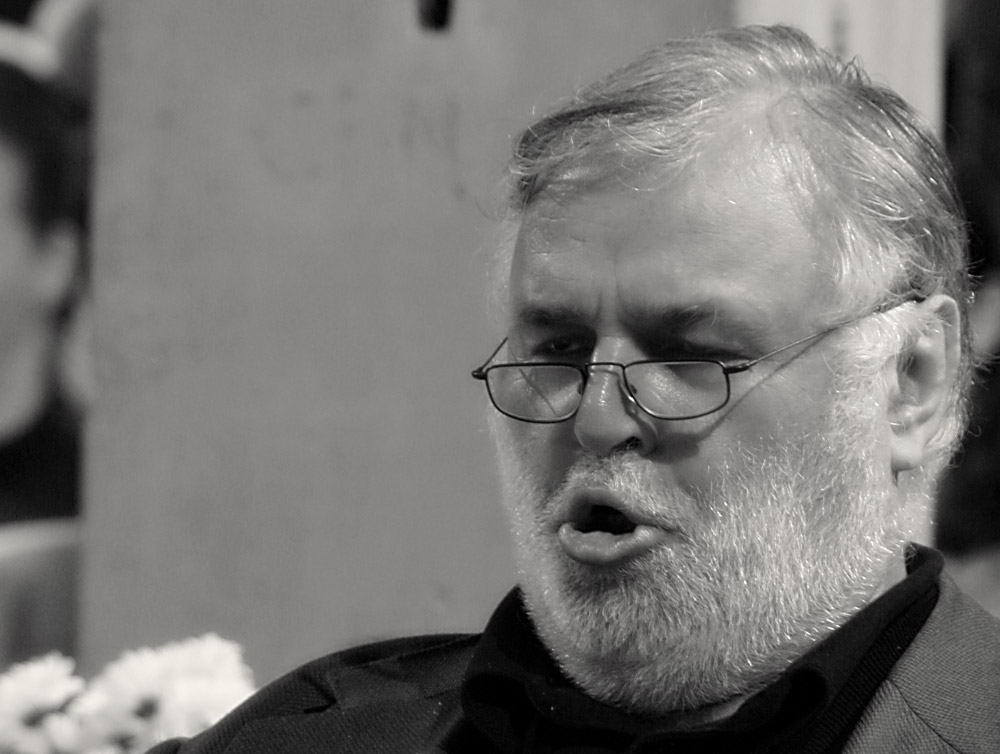 Peter Lika (Elijah)
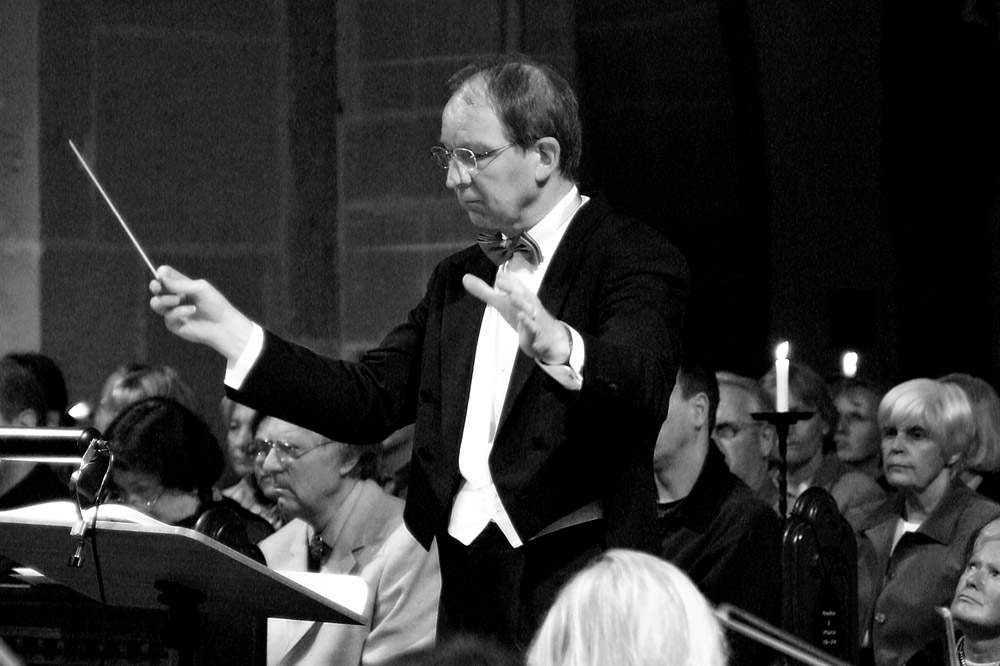 Jürgen Budday (Conductor)