
|
 |
|
|
|
|
|


|
Joseph Haydn Four divertimentos for stringquartet by Joseph Haydn Duo Sonare - Jens Wagner & Thomas Offermann A concert recording from the Audio CD, DDD, ca. 60 min. |
|
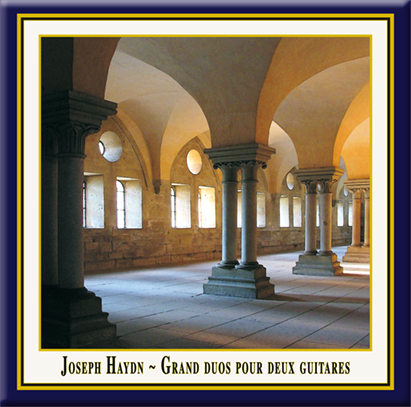
Performance & Opus Apart from the title of the concert programme, Grand Duos pour deux Guitares, what's exceedingly attractive is the fact that a contemporary of Joseph Haydn adapted his string quartets for probably one of the most popular stringed instruments of our time – a version that was surely preformed during the composer's lifetime. In such, from the perspective of zeitgeist and its conjunct societal etiquette, the comprehension of both artists' musical conceptualisation must have converged rather closely. The awe-inspiring joy of playing and charming-elegant wit of the performance at the Maulbronn Monastery's Laymen Refectory show how modern chamber music can be interpreted – to the pleasure of the audience. An almost courtly atmosphere permeated the duo's concert. But let us allow the artists some quotes themselves, out of the performance, so to speak: The guitarist and composer François de Fossa (1775-1849) adapted these four Divertimentos for String Quartet from Joseph Haydn (1732-1809) as "Grand Duos for Two Guitars". De Fossa is still handled as a hot tip by today's guitarists. Only gradually is his work, including numerous adaptations and original compositions for solo guitars and guitar ensembles, being dug out of the archives and made accessible to the public. As Duo Sonare, Thomas Offermann & Jens Wagner have enriched the world of music since 1984 with their elegant interpretations of modern and classical guitar music. “One of the top ensembles of its kind – for music of the 19th century maybe even the best.” Their selected transcriptions are full of humour and originality. Their repertoire, performed on instruments of the respective musical era, brings the full opulence of chamber music to a felicitous consensus that proves how refreshingly old music can be presented to a contemporary audience. It is therefore no surprise that the duo has gained an international following on its concert tours and master courses in over forty countries. |
|
View more of our animations, films and clips at: |
|
Maulbronn Monastery Edition The abbey founded by Cistercian monks in the year 1147 is the only completely conserved mediaeval complex north of the Alps. It was added to the list of UNESCO World Heritage Sites in 1994 as the 13th German site, and is, therewith, in the illustrious company of such great monuments as the Egyptian pyramids and the Taj Mahal. The internationally renowned monastery concerts have been organised since 1968. The performances take place in the unparalleled atmosphere of the abbey's premises (minster, cloister gardens, lay refectory). In the vaults illuminated by romantic candlelight, 25 concerts are held every year. We present a selection of the most beautiful works of ecclesiastic and worldly music in this edition. "What makes the European atmosphere so vivid? With what can the European heritage be defined? Where do the roots of European culture lie? Within the context of our documentary series Maulbronn Monastery Edition, we peruse these questions while documenting great works of European music in live excerpts from one of the most authentic sites this side of the Alps. I have personally experienced the perfect acoustic and architectonic beauty of the performance site and was greatly impressed. A publisher has no choice but to pursue the quest of recording these cultural values for future generations." (Josef-Stefan Kindler, publisher) "The upbeat in the CD edition is a drum beat... the technical sounding, outstandingly successful recording supplies the discography of the work with an interesting and worth listening to variant on the recordings by Harnoncourt, Gardiner, Marriner and Creed." (Dr. Karl-Georg Berg about Jephtha, DIE RHEINPFALZ) |
|
Grand duo pour deux guitares · Opus 2.1 - Hob III:7 Grand duo pour deux guitares · Opus 2.3 - Hob III:9 Minuetto un poco allegretto Grand duo pour deux guitares · Opus 2.2 - Hob III:8 |

